
Sexual Offences Act 2003
The main UK law defining sexual crimes including rape, sexual assault, and offences against children.
The Sexual Offences Act 2003 is the main law in England and Wales about sexual crimes. It explains what rape, sexual assault, and consent mean in law, and sets the age of consent at 16.
The Sexual Offences Act 2003 is the main law in England and Wales that defines sexual crimes — including rape, sexual assault, , offences against children, and abuse of positions of trust. It's the legal framework behind a lot of the things discussed in sex education: the , what consent actually means in law, and what happens when someone's sexual rights are violated. Scotland and Northern Ireland have their own separate but similar legislation. [CHECK: Scottish and NI equivalent Acts]
- The Sexual Offences Act 2003 is the primary law covering sexual offences in England and Wales.
- It defines rape, sexual assault, consent, child sexual offences, and positions of trust.
- It sets the age of consent at 16 and makes any sexual activity with someone under 13 an extremely serious offence.
- Consent is defined as agreeing by choice, with the freedom and capacity to make that choice.
- It's the law that gets applied when sexual crimes are investigated and prosecuted.
What it covers
The Act is a big piece of legislation, but the parts most relevant to young people include:
Consent (Section 74) — the legal definition of consent is "agreeing by choice, and having the freedom and capacity to make that choice." This means consent must be active and genuine — not assumed from silence, not given under pressure, and not possible if someone is asleep, unconscious, or too intoxicated to decide.
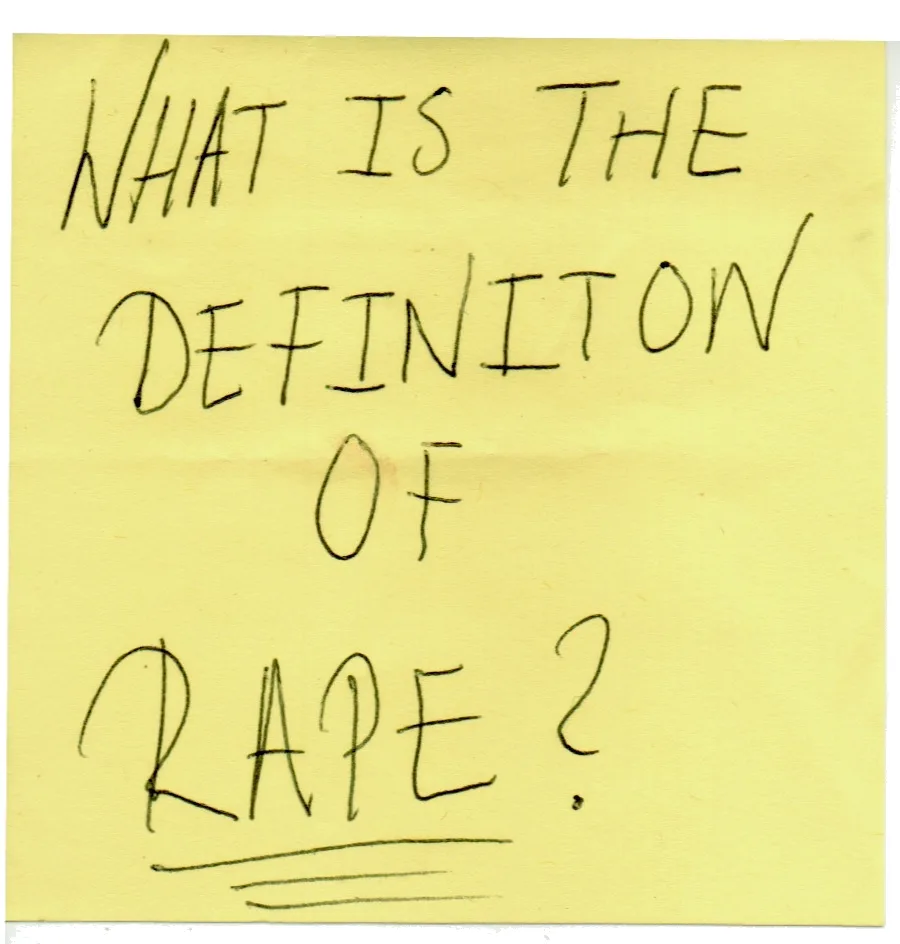
Rape (Section 1) — legally defined as of the , , or mouth with a without consent. This means that in UK law, rape specifically involves a penis — other forms of non-consensual penetration are covered under sexual assault by penetration (Section 2), which carries the same maximum sentence.
Sexual assault (Section 3) — intentional sexual touching without consent. This covers a wide range of behaviour, from groping to any unwanted sexual contact.
Child sexual offences (Sections 5-15) — the Act has specific sections for offences involving children. Any sexual activity with someone under 13 is treated as an extremely serious offence, regardless of claimed consent — the law says a child under 13 can never legally consent. For young people aged 13-15, sexual activity is still illegal (the age of consent is 16), but how it's dealt with depends on the circumstances.
Positions of trust (Section 16-19) — it's illegal for someone in a (teacher, coach, care worker) to have sexual activity with someone under 18 in their care, even if that person is over 16.
(Section 15) — it's an offence for an adult to communicate with a child under 16 with the intent of committing a sexual offence, including arranging to meet them.
How it treats young people
The law recognises that two teenagers in a consensual relationship aren't the same as an adult abusing a child. While sex under 16 is technically illegal, the Crown Prosecution Service (CPS) has guidelines that say prosecution isn't usually in the public interest when both people are of a similar age, the relationship is genuinely consensual, and there's no exploitation involved.
This doesn't mean it's legal — it means the system uses judgement. The law exists to protect young people from exploitation, not to criminalise normal teenage relationships. But the distinction matters: if there's a significant age gap, a , or any coercion, the law is there to act.
Things people get wrong
"The age of consent means you should have sex at 16." The law sets a legal minimum, not a recommendation. Being 16 doesn't mean you're ready, and there's no pressure to start at any particular age.
"Boys can't be victims of sexual assault." The Act protects everyone. People of all genders can be victims, and people of all genders can be perpetrators.
"If you didn't fight back, it wasn't assault." The law doesn't require physical resistance. Freezing, going silent, or not fighting back doesn't mean consent was given. The question is whether the person consented — not whether they physically resisted.
"You can't report something that happened a long time ago." There's no time limit on reporting sexual offences. You can report at any point, no matter how much time has passed.
Things people ask about the Sexual Offences Act
Does this law apply to online behaviour?
Yes. Offences like grooming, sending unsolicited sexual images, and threatening to share intimate images are all covered — whether they happen in person or online.
What's the difference between rape and sexual assault in law?
Rape specifically involves penetration with a penis without consent. Sexual assault covers other non-consensual sexual touching. Assault by penetration (with something other than a penis) is a separate offence that carries the same maximum sentence as rape. [CHECK: current maximum sentences for each]
Can two under-16s both be breaking the law?
Technically, yes — any sexual activity under 16 is illegal regardless of both people's ages. In practice, the CPS and police focus on protecting young people, not criminalising them. Prosecution of two similar-aged teenagers in a genuine, consensual situation is very unlikely.
What should I do if something has happened to me?
You can report to the police (101 non-emergency, 999 in an emergency), or you can talk to a support service first if you're not ready to go to the police. There's no time limit on reporting.
Where to get help
- The police (101 non-emergency, 999 emergency) — sexual offences can be reported at any time, no matter when they happened.
- Rape Crisis England & Wales — support for anyone who has experienced sexual violence, at any point in their life.
- Childline (0800 1111) — confidential support for under-19s about anything, including sexual abuse or assault.
- Sexual Assault Referral Centres (SARCs) — specialist centres for anyone who's been sexually assaulted, providing forensic examination, support, and referral. Available without a police report.
The Sexual Offences Act 2003 is the main law in England and Wales that deals with sexual crimes. It covers things like rape, sexual assault, , crimes against children, and adults who abuse their .
The law says consent means agreeing to something by choice, with the freedom and ability to make that choice. If someone is asleep, drunk, or being pressured, they can't properly consent.
The law sets the at 16. Any sexual activity with someone under 13 is treated as extremely serious no matter what. For 13-15 year olds, it's still illegal, but the police use common sense — two teenagers in a real relationship are treated very differently from an adult targeting a young person.
The law also says that people in positions of authority — like teachers, coaches, or care workers — can't have sexual contact with anyone under 18 in their care, even if that person is over 16.
This law protects everyone, not just girls and women. Boys and men can be victims too.
You don't have to have fought back for something to count as assault. Freezing or going quiet doesn't mean you agreed.
There's no time limit on reporting a sexual crime. You can report it whenever you're ready.
Related terms
Questions about this
Need to talk to someone?
- ChildlineAny issue affecting under-19s. Abuse, bullying, mental health, relationships, sexual health.