
Friends with benefits
A sexual relationship between friends without romantic commitment.
Friends with benefits means two people who are friends and also have sex, but aren't boyfriend and girlfriend or in a romantic relationship.
Friends with benefits (often shortened to FWB) means two people who are friends and also have sex, but without being in a romantic relationship. It's not dating, it's not a couple — it's a friendship that includes a sexual element. It can work well for some people, but it can also get complicated if feelings or expectations don't match up.
- FWB means a friendship that includes sex but not romantic commitment.
- It only works if both people are genuinely on the same page about what it is.
- , , and communication matter just as much in a FWB situation as in any relationship.
- One or both people developing romantic feelings is very common — and that's when things get tricky.
- and protection still apply. The "casual" label doesn't change the health risks.
How it works (in theory)
The idea is straightforward: you're friends, you enjoy each other's company, you also have sex sometimes, and neither of you expects it to become a relationship. No jealousy, no obligation, no labels. In theory, you get the good bits of sex — pleasure, intimacy, physical connection — without the complications of a relationship.
In practice, it's more nuanced than that. Human brains aren't great at keeping sex and feelings in separate boxes. Oxytocin (sometimes called the "bonding hormone") is released during sex and physical closeness, and it can make you feel more attached to someone whether you planned to or not.
When it works
FWB arrangements tend to work best when both people are genuinely honest about what they want, check in with each other regularly, and are willing to end the arrangement if it stops working for either person. Clear communication upfront — about exclusivity, what happens if feelings develop, and what the boundaries are — makes a big difference.
When it doesn't
The most common way FWB goes wrong is when one person catches feelings and the other doesn't. This can be really painful, especially because the friendship is at stake too. Other common problems: one person assuming exclusivity when the other is seeing other people, or one person feeling used or undervalued because the "benefits" get prioritised over the "friends" part.
There's also a risk. If one person is more emotionally invested than the other, the person with less investment often ends up holding most of the control — even if they don't mean to.
FWB vs situationship
People sometimes use "situationship" as a synonym for FWB, but they're slightly different. A situationship is usually more ambiguous — it might involve date-like behaviour, romantic feelings, and confusion about what it actually is. FWB is, in theory, clearer: you're friends, you have sex, and you've agreed that's all it is. In reality, the lines blur a lot.
Things people ask about friends with benefits
Can you really have sex with a friend and keep it casual?
Some people can, some can't. It depends on the people involved, how well you communicate, and whether you're genuinely okay with the arrangement. There's no shame in trying it and realising it doesn't work for you.
What if I catch feelings?
Be honest — with yourself and with them. Pretending you don't have feelings when you do usually makes things worse. The friendship is more likely to survive honesty than a slow buildup of unspoken resentment.
Do we need to use contraception and ?
Yes. The casual nature of the arrangement doesn't change the biology. and STIs don't care about your relationship status. If either of you is also sleeping with other people, condoms are especially important.
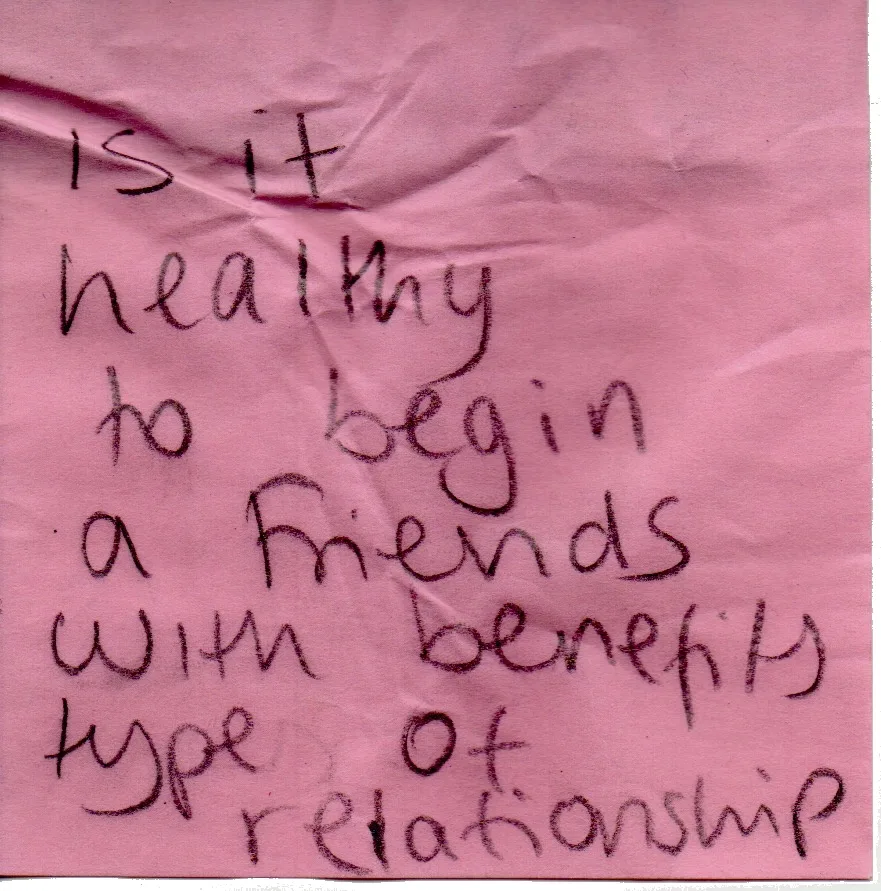
Is it okay to have a FWB arrangement?
That's for you to decide. Some people enjoy them, some don't. The important things are that both people consent, both people are honest, and nobody is being pressured or hurt.
Friends with benefits (sometimes called FWB) is when two people are friends and also have sex, but without being in a romantic relationship. They're not dating. They're not a couple. They're friends who sometimes do sexual things together.
In theory, it sounds simple. In practice, it can get complicated. The most common problem is that one person starts to develop romantic feelings while the other doesn't. That can be really painful, and it can hurt the friendship too.
For it to work, both people need to be completely honest about what they want. Talking about it matters — not just at the start, but as things go on. If it stops feeling right for either person, it should be okay to say so.
Just because it's casual doesn't change the health side of things. Birth control and protection against infections still matter. and infections don't care whether you call it a relationship or not.
Some people enjoy this kind of arrangement. Others find it doesn't suit them. There's no right or wrong answer. What matters is that both people agree to it, both are honest, and nobody is being hurt or pressured.
Related terms
Need to talk to someone?
- ChildlineAny issue affecting under-19s. Abuse, bullying, mental health, relationships, sexual health.