
Equality Act 2010
UK law protecting people from discrimination. Includes pregnancy as a protected characteristic, meaning schools can't exclude pregnant students.
A UK law that says you can't be treated unfairly because of who you are. This includes your gender, who you're attracted to, whether you're pregnant, your race, and other things about you.
The Equality Act 2010 is a UK law that protects people from discrimination. It lists specific "protected characteristics" — things about a person that it's illegal to discriminate against, including sex, , gender reassignment, race, disability, religion, age, , and marriage. It's in this glossary because several of those characteristics are directly relevant to sex, relationships, and identity.
- The Equality Act 2010 protects people from discrimination based on nine protected characteristics.
- Sexual orientation, sex, gender reassignment, and pregnancy are all protected — meaning it's illegal to treat someone unfairly because of these.
- It applies to schools, workplaces, healthcare, shops, and services.
- A school can't exclude you or treat you worse for being , being LGBTQ+, or because of your .
The protected characteristics
The Act lists nine:
- Age
- Disability
- Gender reassignment — this protects trans people from discrimination
- Marriage and civil partnership
- Pregnancy and maternity
- Race
- Religion or belief
- Sex
- Sexual orientation
If someone treats you unfairly because of any of these characteristics — whether that's a teacher, an employer, a shop, a doctor, or a service — that's discrimination, and it's against the law.
Why it matters for young people
A few of these are especially relevant in the context of sex and relationships:
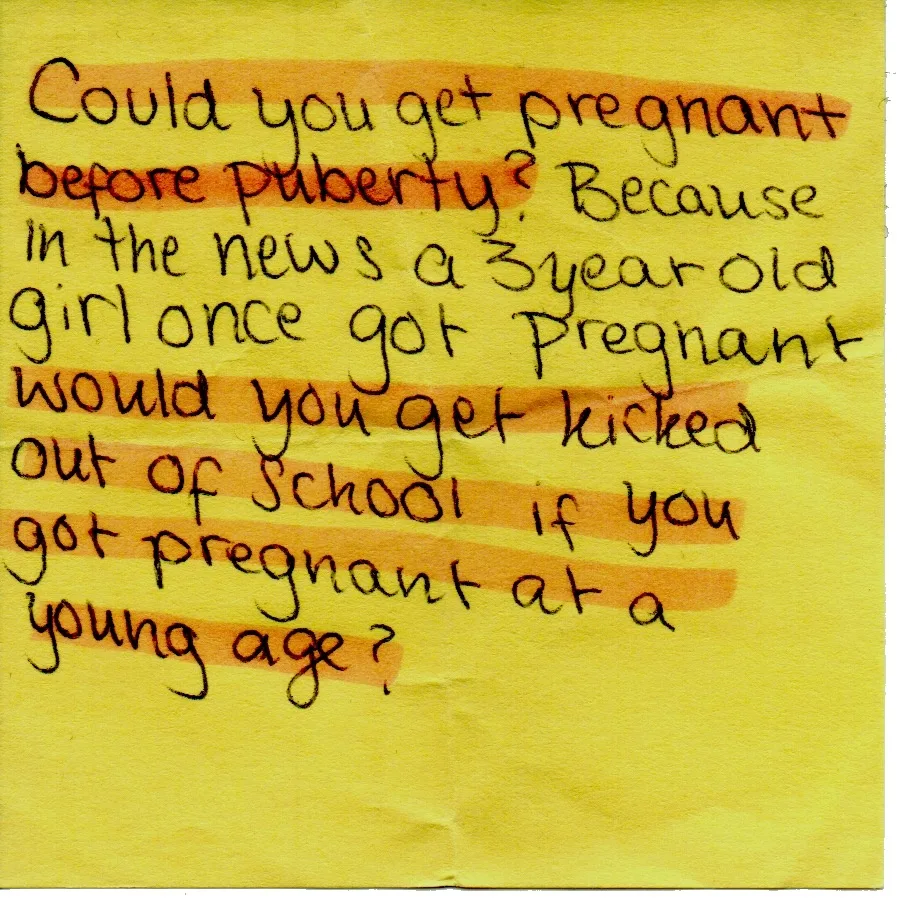
Pregnancy — a school cannot exclude you, put you in isolation, or treat you differently because you're pregnant. Pregnancy is a protected characteristic. If you become pregnant while at school, you have the right to continue your education and to be supported. [CHECK: specific school duty details]
Sexual orientation — it's illegal to discriminate against someone for being , , , or any other sexual orientation. This applies in school, at work, and in services. If a teacher, employer, or anyone else treats you worse because of your sexuality, that's against the law.
Gender reassignment — trans people are protected from discrimination. You don't need to have had surgery or any medical treatment for this protection to apply — it covers anyone who is proposing to undergo, is undergoing, or has undergone a process of changing their gender. [CHECK: current legal position on inclusion under the Act]
What counts as discrimination
The Act covers several types:
- Direct discrimination — treating someone worse because of a protected characteristic (e.g. not giving someone a job because they're gay)
- Indirect discrimination — a rule or policy that applies to everyone but puts people with a protected characteristic at a disadvantage
- Harassment — unwanted behaviour related to a protected characteristic that creates a hostile environment
- Victimisation — treating someone badly because they've made a complaint about discrimination
Things people ask about the Equality Act
Does this protect me at school?
Yes. Schools are covered by the Equality Act. They can't discriminate against students based on protected characteristics, and they have a duty to prevent harassment. If you're being treated unfairly, you can raise it with the school and, if needed, with the local authority or the Equality and Human Rights Commission.
What if my school has a religious ethos?
Schools with a religious character still have to comply with the Equality Act. They can teach their beliefs, but they can't discriminate against students based on protected characteristics like sexual orientation or gender reassignment.
Does it protect me from bullying?
The Act protects against harassment, which overlaps with bullying when it's related to a protected characteristic. If you're being bullied because of your sexuality, gender identity, race, or disability, the school has a legal duty to address it.
What if I'm not sure if something counts as discrimination?
If you feel you've been treated unfairly because of who you are, it's worth looking into. The Equality Advisory Support Service can help you understand whether what happened is covered by the law.
Where to get help
- Equality Advisory Support Service (EASS) — free advice on discrimination and human rights issues. Can help you understand your rights and next steps.
- Stonewall — information about LGBTQ+ rights under the Equality Act, including at school.
- Childline (0800 1111) — if you're experiencing discrimination or bullying at school and need someone to talk to.
The Equality Act 2010 is a law in the UK that protects people from being treated unfairly. It lists nine things about a person that nobody is allowed to discriminate against. These include your sex, your race, whether you have a disability, your religion, your age, who you're attracted to, and whether you're .
This law applies at school, at work, in shops, in hospitals, and in other services.
For young people, some of the most important parts are about , sexuality, and gender. A school can't kick you out or treat you badly for being . Nobody can treat you worse because you're , , or . And trans people are protected from unfair treatment too.
If someone at school bullies you because of any of these things, the school has a legal duty to do something about it.
Discrimination means things like treating someone worse because of who they are, having rules that unfairly affect certain people, or creating a hostile environment through unwanted behaviour.
If you think you've been treated unfairly because of who you are, there are organisations that can help you understand your rights and what to do next.
Related terms
Need to talk to someone?
- ChildlineAny issue affecting under-19s. Abuse, bullying, mental health, relationships, sexual health.