
Sex and intimacy
Overview
Our teaching on sex and intimacy addresses the questions young people actually have — not just the biology, but the feelings, the decisions, the pressure, and the reality of navigating sexual relationships for the first time.
This topic covers sexual readiness, the emotional dimensions of intimacy, and what healthy sexual relationships involve — including the role of communication, mutual respect, and care. It also tackles what gets in the way: unrealistic expectations from pornography, pressure from partners or peers, and the fear of being judged for saying no or for saying yes.
We don't assume all young people are having sex. We meet students where they are — whether that's not interested, not ready, curious, or already sexually active. A session might explore readiness and decision-making, or it might focus on the gap between what young people see online and what real intimacy actually involves. The aim is the same in every case: make sure they have the knowledge and confidence to make decisions that are right for them.
Key learning outcomes
By the end of lessons on this topic, students will:
- Understand the difference between physical sex and emotional intimacy
- Explore what sexual readiness means and how to assess it for themselves
- Recognise the role of communication, , and mutual care in sexual relationships
- Challenge unrealistic portrayals of sex in media and pornography
- Develop the confidence to make informed decisions about their own sexual activity
- Understand the emotional consequences — both positive and negative — of sexual relationships
- Know where to access confidential support and sexual health services
Why teaching about sex and intimacy matters
Young people are forming their expectations about sex long before formal education catches up — from what they see online, hear from peers, and absorb from media. Those expectations are often unrealistic, sometimes harmful, and almost always disconnected from the emotional reality.
This isn't about encouraging or discouraging sexual activity. It's about making sure that when young people do make choices about intimacy, they do so with clarity, confidence, and care — for themselves and for the other person. That requires honest conversation, not euphemism.
Curriculum alignment
This topic addresses 11 requirements from the DfE statutory RSE guidance and 18 learning outcomes from the PSHE Association Programme of Study , across KS3, KS4, KS5.
View all curriculum references
DfE RSE Statutory Guidance 2026
- "A range of strategies for identifying, resisting and understanding pressure in relationships from peers or others, including sexual pressure, and how to avoid putting pressure on others" Secondary RSE: Being Safe, 2 · KS3, KS4
- "How the use of alcohol and drugs can lead people to take risks in their sexual behaviour" Secondary RSE: Intimate and sexual relationships, 10 · KS3, KS4
- "How to recognise, respect and communicate consent and boundaries in relationships, including in early romantic relationships and early sexual relationships" Secondary RSE: Being Safe, 1 · KS3, KS4
- "Sexual consent and their capacity to give, withhold or remove consent at any time, even if initially given, as well as considerations prior to sexual activity including the law, faith and family values" Secondary RSE: Intimate and sexual relationships, 3 · KS3, KS4
- "That all aspects of health can be affected by choices they make in sex and relationships, positively or negatively, e.g. physical, emotional, mental, sexual and reproductive health and wellbeing" Secondary RSE: Intimate and sexual relationships, 4 · KS3, KS4
- "That sex, for people who feel ready and are over the age of consent, can and should be enjoyable and positive" Secondary RSE: Intimate and sexual relationships, 1 · KS3, KS4
- "That some sexual behaviours can be harmful" Secondary RSE: Intimate and sexual relationships, 5 · KS3, KS4
- "The characteristics of positive relationships of all kinds, online and offline, including romantic relationships. Including the role of consent, trust, mutual respect, honesty, kindness, loyalty, shared interests, boundaries, tolerance, privacy, and the management of conflict" Secondary RSE: Respectful relationships, 1 · KS3, KS4
- "The law about the age of consent, that they have a choice about whether to have sex, that many young people wait until they are older, and that people of all ages can enjoy intimate and romantic relationships without sex" Secondary RSE: Intimate and sexual relationships, 2 · KS3, KS4
- "The physical and psychological risks associated with alcohol consumption, including what constitutes low risk alcohol consumption in adulthood, and how to decrease the risks of having a drink spiked" Secondary Health: Drugs alcohol tobacco and vaping, 3 · KS3, KS4
- "The role of consent, including in romantic and sexual relationships. That ethical behaviour goes beyond consent and involves kindness, care, attention to the needs and vulnerabilities of the other person, as well as an awareness of power dynamics" Secondary RSE: Respectful relationships, 8 · KS3, KS4
PSHE Association Programme of Study 2020
- "About specific STIs, their treatment and how to reduce the risk of transmission" KS4 Core Theme 1: Health and Wellbeing, H27 · KS4
- "About the concept of consent in maturing relationships" KS4 Core Theme 2: Relationships, R18 · KS4
- "How to reduce the risk of contracting or passing on a sexually transmitted infection (STI)" KS5 Core Theme 1: Health and Wellbeing, H19 · KS5
- "How to seek, give, not give and withdraw consent (in all contexts, including online)" KS3 Core Theme 2: Relationships, R26 · KS3
- "That consent is freely given; that being pressurised, manipulated or coerced to agree to something is not giving consent, and how to seek help in such circumstances" KS3 Core Theme 2: Relationships, R24 · KS3
- "That everyone has the choice to delay sex, or to enjoy intimacy without sex" KS3 Core Theme 2: Relationships, R12 · KS3
- "That intimate relationships should be pleasurable" KS3 Core Theme 2: Relationships, R31 · KS3
- "The communication and negotiation skills necessary for contraceptive use in healthy relationships" KS3 Core Theme 2: Relationships, R32 · KS3
- "The different types of intimacy — including online — and their potential emotional and physical consequences (both positive and negative)" KS4 Core Theme 1: Health and Wellbeing, H26 · KS4
- "The risks related to unprotected sex" KS3 Core Theme 2: Relationships, R33 · KS3
- "The role of pleasure in intimate relationships, including orgasms" KS4 Core Theme 2: Relationships, R2 · KS4
- "The skills to assess their readiness for sex, including sexual activity online, as an individual and within a couple" KS4 Core Theme 2: Relationships, R21 · KS4
- "To develop and maintain healthy, pleasurable relationships and explore different levels of emotional intimacy" KS5 Core Theme 2: Relationships, R6 · KS5
- "To evaluate different degrees of emotional intimacy in relationships, the role of pleasure, how they understand the difference between 'love' and 'lust'" KS5 Core Theme 2: Relationships, R7 · KS5
- "To gauge readiness for sexual intimacy" KS3 Core Theme 2: Relationships, R28 · KS3
- "To manage the influence of drugs and alcohol on decision-making within relationships and social situations" KS3 Core Theme 2: Relationships, R20 · KS3
- "To understand how alcohol and drug use can affect decision making and personal safety, including looking out for friends, safe travel and drink-spiking" KS5 Core Theme 1: Health and Wellbeing, H22 · KS5
- "To understand the moral and legal responsibilities that someone seeking consent has, and the importance of respecting people's right to give, not give, or withdraw their consent" KS5 Core Theme 2: Relationships, R11 · KS5
Explore ready-made lessons on Sex and intimacy
Browse expert-written RSE lessons in the Tailor library, ready to use with your students.
Questions young people ask about Sex and intimacy
-
 Sex
SexAre you familiar with the term 'popping a cherry'? If so, can you explain it to me?
Read the answer -
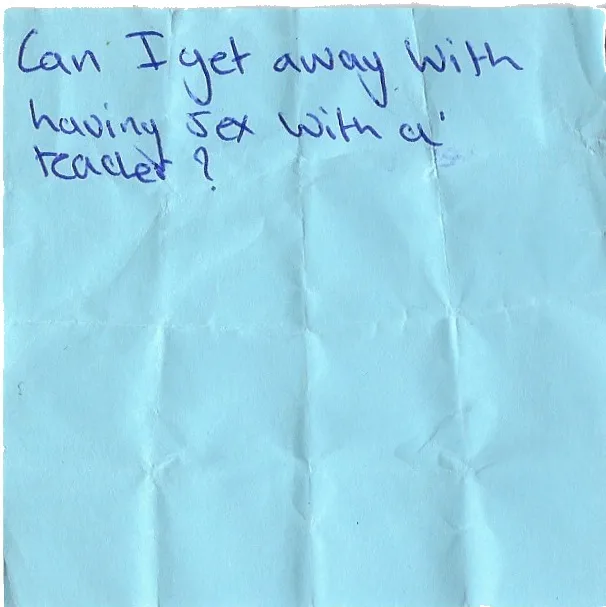 Sex & the Law
Can I get away with having sex with a teacher?
Read the answer -
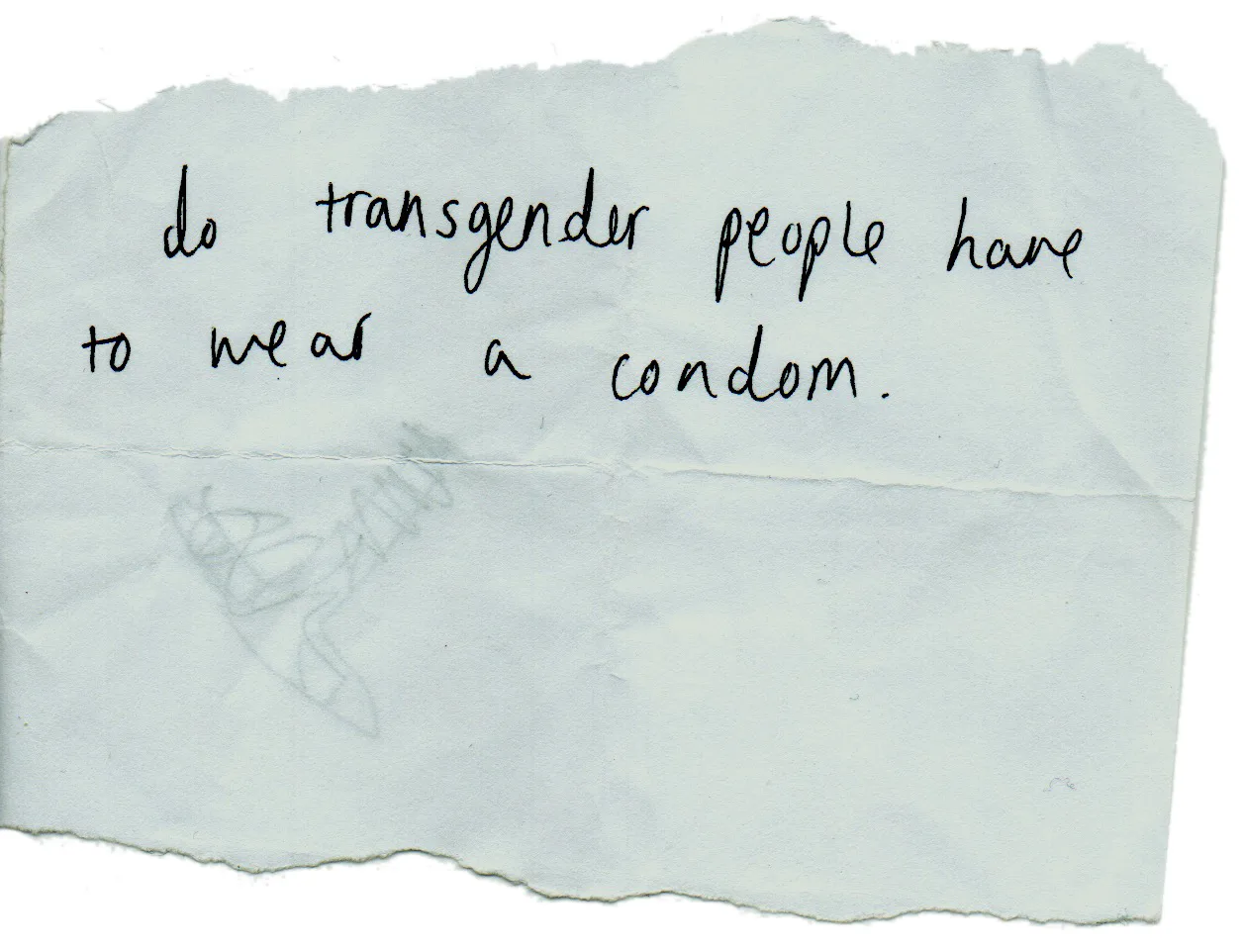 Sexual Health
Do transgender people have to wear a condom?
Read the answer -
 Sex
SexDo you bleed the first time you have sex?
Read the answer -
 Sex
SexDo you think oral sex is morally wrong?
Read the answer -
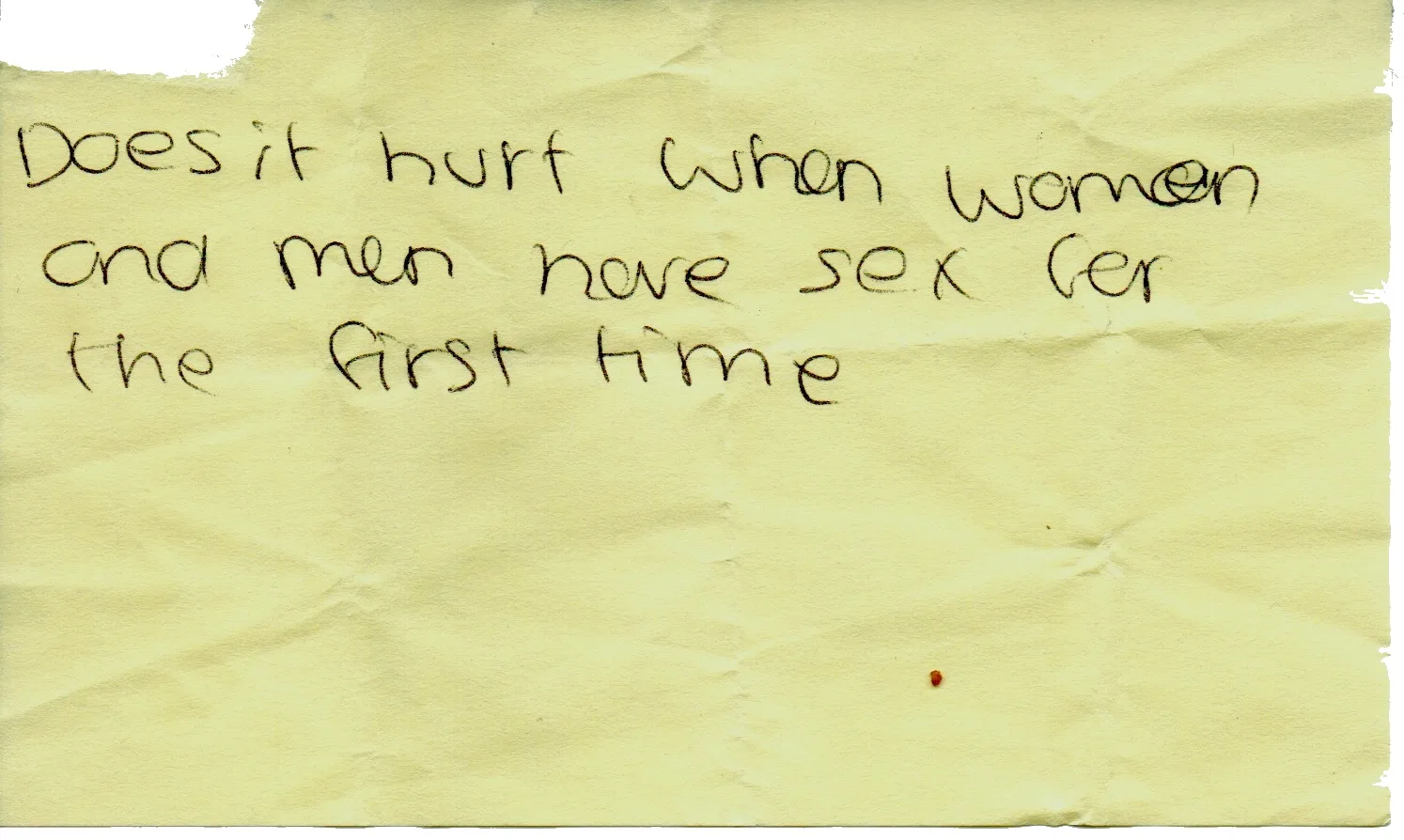 Sex
SexDoes it hurt when women and men have sex for the first time?
Read the answer




Bring Sex and intimacy into your school
Expert-led RSE sessions delivered directly to your students, or training for your staff to deliver with confidence.
RSE training