

Consent
Overview
Our teaching on goes beyond the textbook definition. Yes, we cover what consent means in law. But more than that, we help young people understand what it feels like — what it looks like when someone isn't sure, when a yes has pressure behind it, when silence isn't the same as agreement.
Consent isn't a one-off conversation. It threads through friendships, physical contact, online sharing, and eventually sexual relationships. Whether that's an introduction to personal for Year 5 or a deep dive into coercion and intoxication with sixth formers, the ground we cover reflects what students actually need.
We don't shy away from the grey areas, because those are exactly where young people get stuck. What happens when someone says yes but their body language says no? What does enthusiastic consent actually look like? How do you say no to someone you care about without it feeling like rejection?
Key learning outcomes
By the end of lessons on this topic, students will:
- Understand what consent means and why it must be freely given, informed, and reversible
- Recognise the difference between genuine agreement and compliance under pressure
- Develop the language and confidence to set and communicate personal boundaries
- Identify situations where consent cannot be given — including where alcohol, age, or are involved
- Explore how consent applies across all relationships, not just sexual ones
- Learn what the law says about consent and what that means in practice
- Challenge common myths, including the idea that consent is complicated or ambiguous when it really isn't
Why teaching consent matters
Young people encounter consent situations long before they have formal language for them. Every playground disagreement about personal space, every group chat where someone's photo gets shared without asking, every party where someone does something they wouldn't have done sober — these are consent situations.
Good consent education doesn't make things awkward. It makes things clearer. It gives young people the words for what they already sense but can't articulate — and that clarity protects everyone.
Curriculum alignment
This topic addresses 16 requirements from the DfE statutory RSE guidance and 7 learning outcomes from the PSHE Association Programme of Study , across KS1, KS2, KS3, KS4, KS5.
View all curriculum references
DfE RSE Statutory Guidance 2026
- "A range of strategies for identifying, resisting and understanding pressure in relationships from peers or others, including sexual pressure, and how to avoid putting pressure on others" Secondary RSE: Being Safe, 2 · KS3, KS4
- "How inequalities of power can impact behaviour within relationships, including sexual relationships" Secondary RSE: Respectful relationships, 10 · KS3, KS4
- "How to communicate effectively and manage conflict with kindness and respect; how to be assertive and express needs and boundaries; how to manage feelings, including disappointment and frustration" Relationships Education: Respectful kind relationships, 3 · KS1, KS2
- "How to recognise, respect and communicate consent and boundaries in relationships, including in early romantic relationships and early sexual relationships" Secondary RSE: Being Safe, 1 · KS3, KS4
- "Sexual consent and their capacity to give, withhold or remove consent at any time, even if initially given, as well as considerations prior to sexual activity including the law, faith and family values" Secondary RSE: Intimate and sexual relationships, 3 · KS3, KS4
- "That each person's body belongs to them, and the differences between appropriate and inappropriate or unsafe contact, including physical contact" Relationships Education: Being Safe, 3 · KS1, KS2
- "That fixated, obsessive, unwanted and repeated behaviours can be criminal, and where to get help if needed" Secondary RSE: Being Safe, 10 · KS3, KS4
- "The characteristics of positive relationships of all kinds, online and offline, including romantic relationships. Including the role of consent, trust, mutual respect, honesty, kindness, loyalty, shared interests, boundaries, tolerance, privacy, and the management of conflict" Secondary RSE: Respectful relationships, 1 · KS3, KS4
- "The concepts and laws relating to domestic abuse, including controlling or coercive behaviour, emotional, sexual, economic or physical abuse, and violent or threatening behaviour" Secondary RSE: Being Safe, 9 · KS3, KS4
- "The concepts and laws relating to harms which are exploitative, including sexual exploitation, criminal exploitation and abuse, grooming, and financial exploitation" Secondary RSE: Being Safe, 11 · KS3, KS4
- "The difference between being assertive and being controlling, and conversely the difference between being kind to other people and neglecting your own needs" Relationships Education: Respectful kind relationships, 4 · KS1, KS2
- "The importance of setting and respecting healthy boundaries in relationships with friends, family, peers and adults" Relationships Education: Respectful kind relationships, 2 · KS1, KS2
- "The law about the age of consent, that they have a choice about whether to have sex, that many young people wait until they are older, and that people of all ages can enjoy intimate and romantic relationships without sex" Secondary RSE: Intimate and sexual relationships, 2 · KS3, KS4
- "The risks and signs that they may be at risk of grooming or exploitation, and how to seek help where there is a concern" Secondary Health: Personal safety, 6 · KS3, KS4
- "The role of consent, including in romantic and sexual relationships. That ethical behaviour goes beyond consent and involves kindness, care, attention to the needs and vulnerabilities of the other person, as well as an awareness of power dynamics" Secondary RSE: Respectful relationships, 8 · KS3, KS4
- "What sorts of boundaries are appropriate in friendships with peers and others (including online)" Relationships Education: Being Safe, 1 · KS1, KS2
PSHE Association Programme of Study 2020
- "About the challenges associated with getting help in domestic abuse situations of all kinds; the importance of doing so; sources of appropriate advice and support, and how to access them" KS4 Core Theme 2: Relationships, R32 · KS4
- "About the concept of consent in maturing relationships" KS4 Core Theme 2: Relationships, R18 · KS4
- "How to seek, give, not give and withdraw consent (in all contexts, including online)" KS3 Core Theme 2: Relationships, R26 · KS3
- "That consent is freely given; that being pressurised, manipulated or coerced to agree to something is not giving consent, and how to seek help in such circumstances" KS3 Core Theme 2: Relationships, R24 · KS3
- "To recognise and manage different forms of abuse, sources of support and exit strategies for unhealthy relationships" KS5 Core Theme 2: Relationships, R20 · KS5
- "To recognise and manage negative influence, manipulation and persuasion in a variety of contexts, including online" KS5 Core Theme 2: Relationships, R19 · KS5
- "To understand the moral and legal responsibilities that someone seeking consent has, and the importance of respecting people's right to give, not give, or withdraw their consent" KS5 Core Theme 2: Relationships, R11 · KS5
Explore ready-made lessons on Consent
Browse expert-written RSE lessons in the Tailor library, ready to use with your students.
Questions young people ask about Consent
-
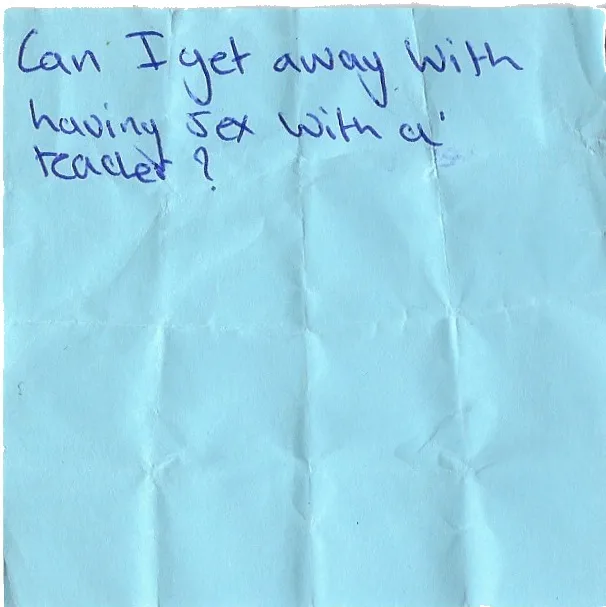 Sex & the Law
Can I get away with having sex with a teacher?
Read the answer -
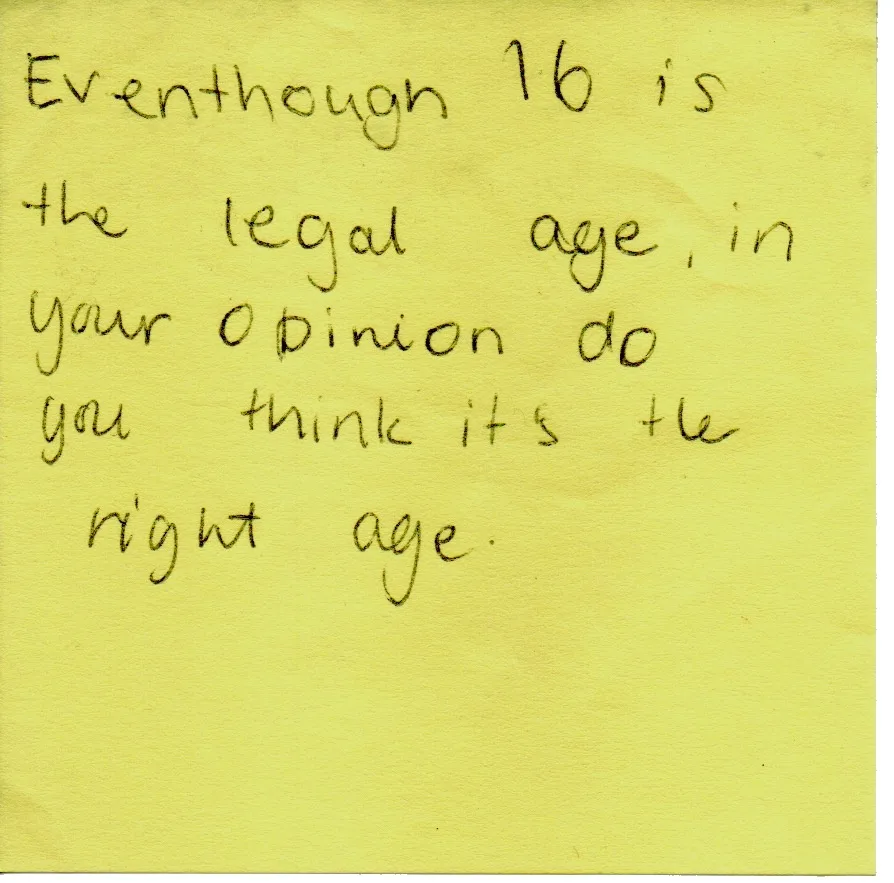 Sex & the Law
Even though 16 is the legal age, in your opinion do you it's the right age?
Read the answer -
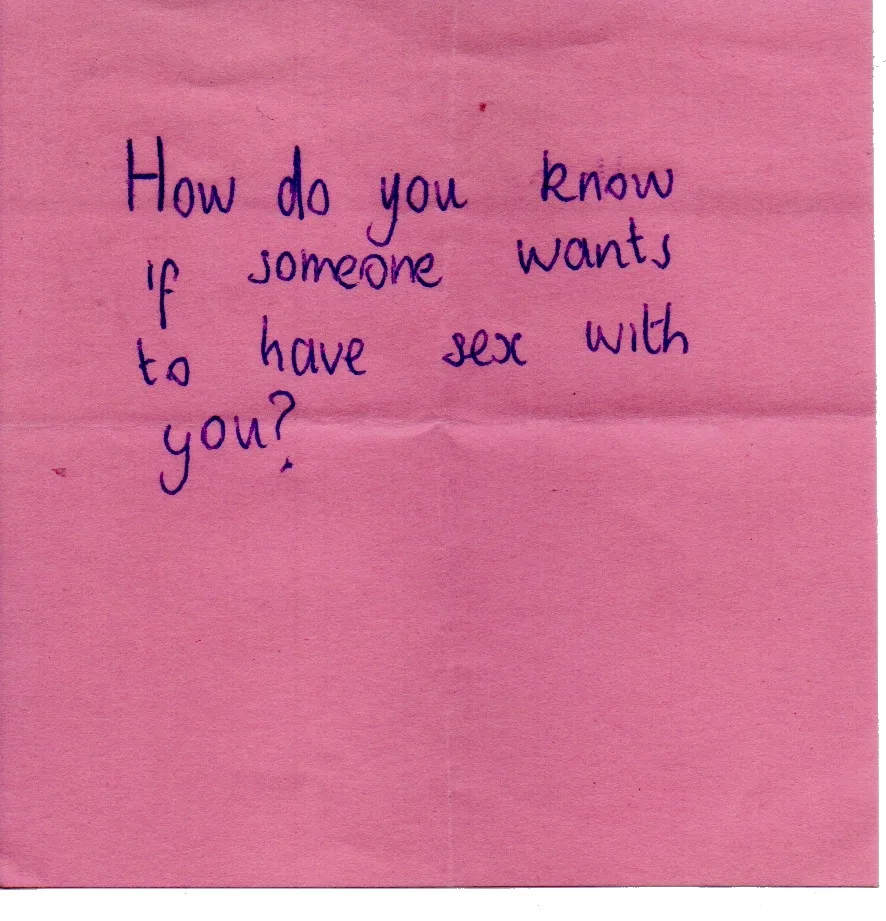 Sex
SexHow do you know if someone wants to have sex with you?
Read the answer -
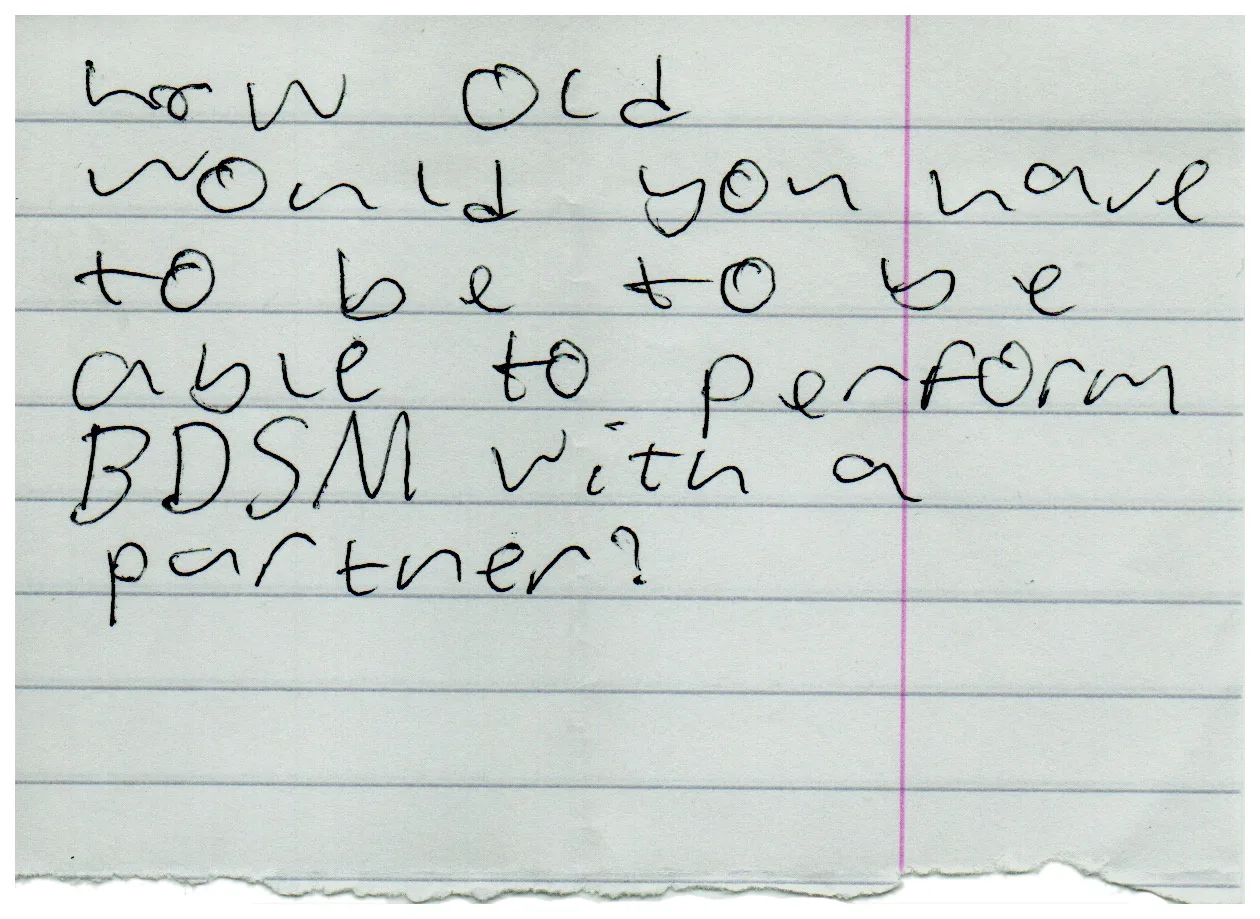 Sex
SexHow old would you have to be to be able to be able to BDSM with a partner?
Read the answer -
 Relationships
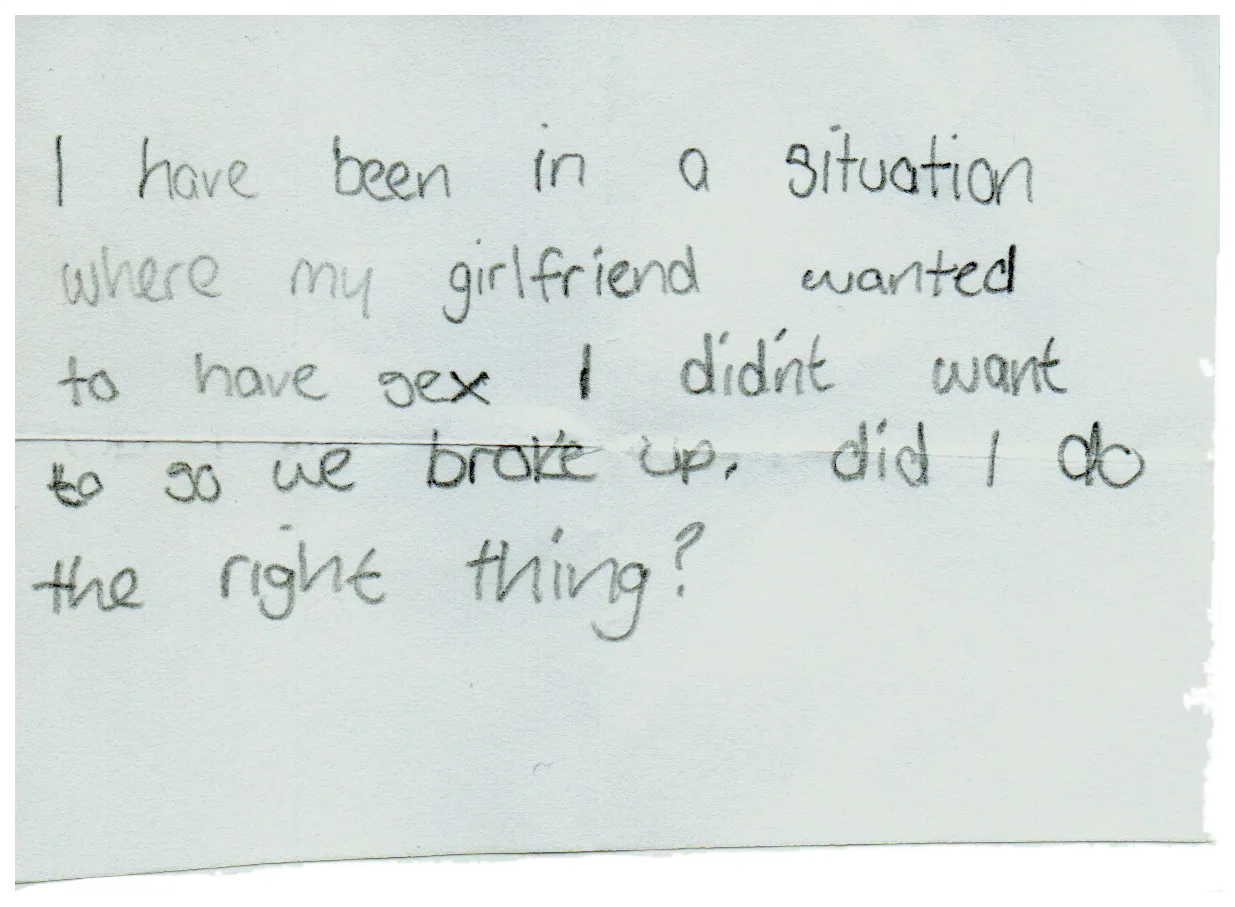
I have been in a situation where my girlfriend wanted to have sex but I dodn't so we broke up. Did I do the right thing?
Read the answer -
 Sex & the Law
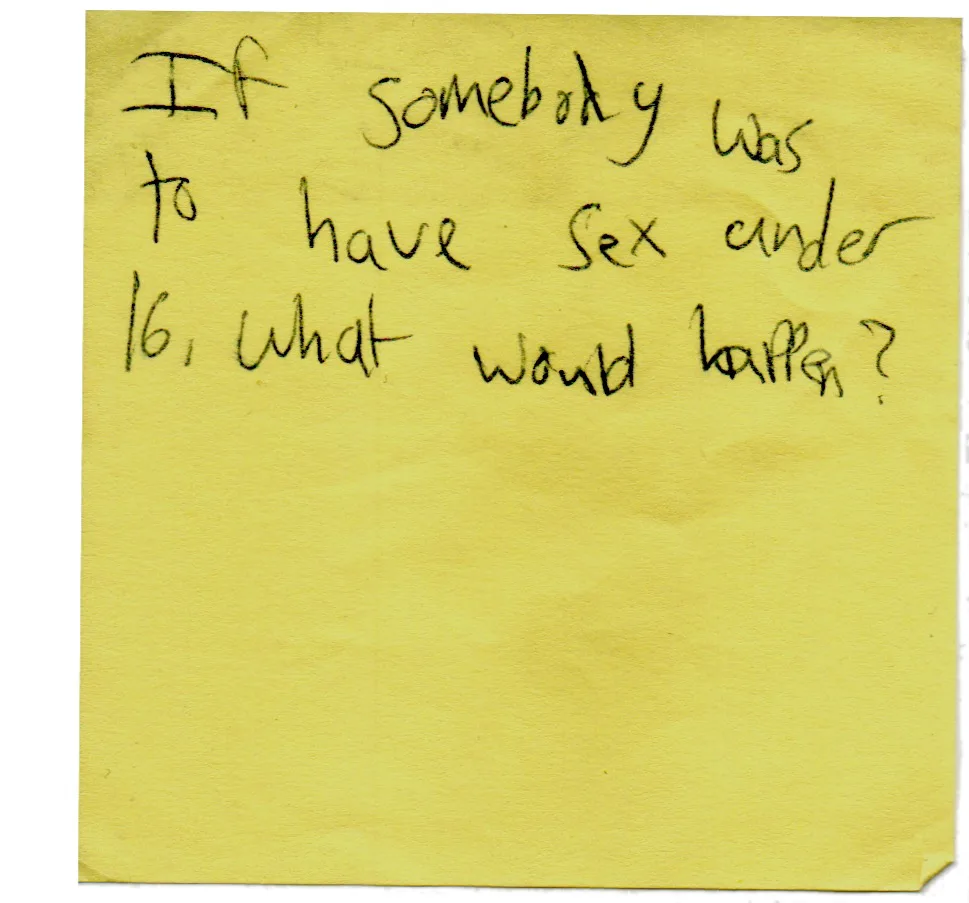
If somebody was to have sex under 16, what would happen?
Read the answer


Bring Consent into your school
Expert-led RSE sessions delivered directly to your students, or training for your staff to deliver with confidence.
Explore RSE delivery