
Intersex
Born with a combination of male and female physical characteristics. More common than most people realise.
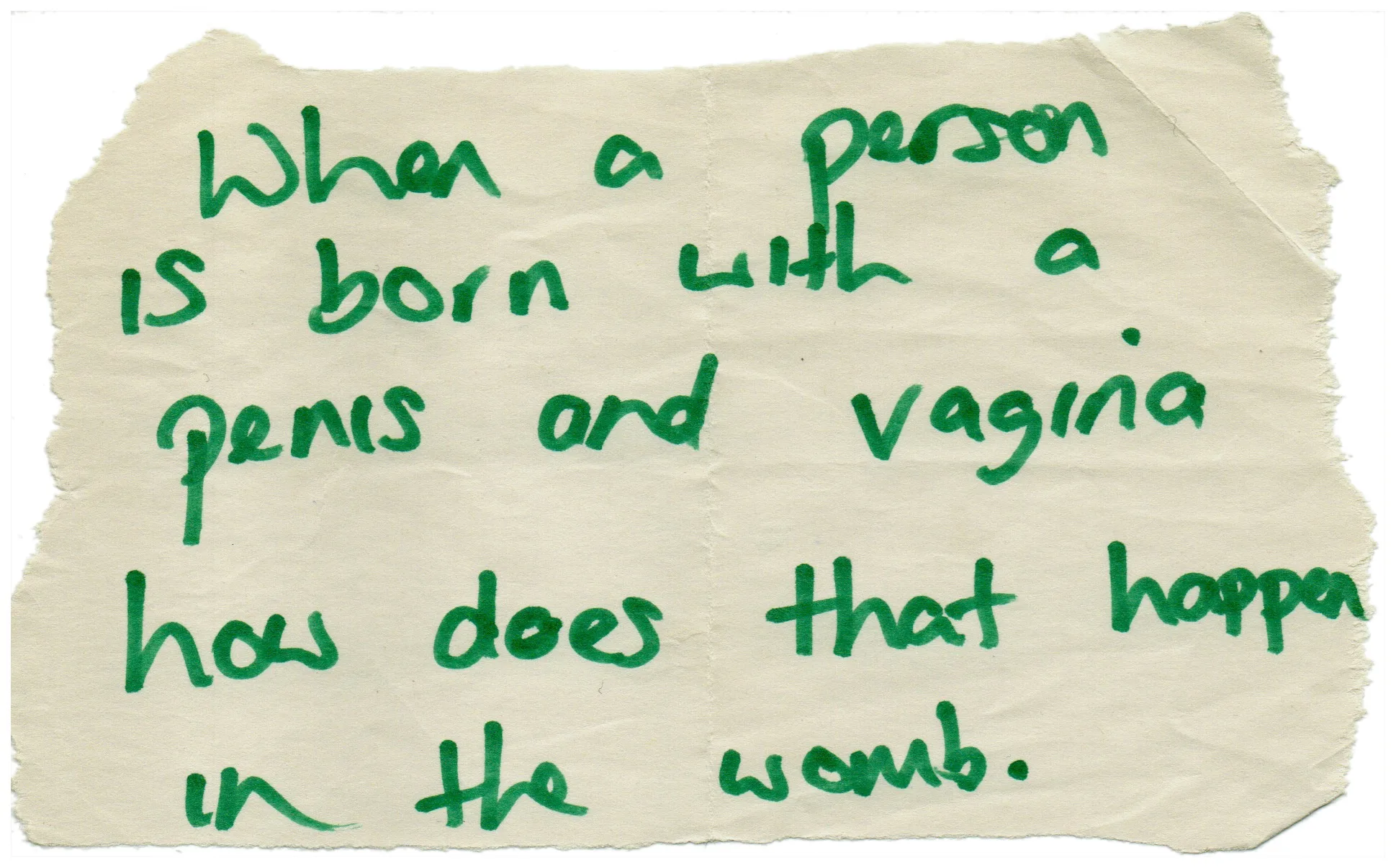
Intersex means being born with a body that doesn't fit neatly into what's usually called "male" or "female." It's a natural thing that's more common than most people think.
Intersex means being born with a body that doesn't fit neatly into the typical definitions of "male" or "female." This might involve differences in chromosomes, , genitals, or internal reproductive organs. It's a natural variation in human biology — not a disorder, not a mistake, and much more common than most people realise.
- Intersex people are born with physical sex characteristics that don't fit typical male or female categories.
- It's estimated that about 1.7% of the population is intersex — roughly as common as having red hair. [CHECK: commonly cited figure, note some estimates vary]
- Being intersex is about biology, not or . Intersex people can have any gender identity and any sexual orientation.
- There are many different intersex variations — it's not one single condition.
- Some people find out they're intersex at birth, others during , and some not until adulthood.
What it means in practice
Sex isn't as simple as "male" or "female" — it's made up of several components: chromosomes (usually XX or XY, but not always), hormones (, , and others), internal organs (, testes, or sometimes both), and external genitals. Most people's bodies line up in the expected way, but for intersex people, one or more of these doesn't follow the typical pattern.
There are lots of different intersex variations. Some examples:
- Someone with XY chromosomes whose body doesn't respond to testosterone, so they develop with a female appearance (androgen insensitivity syndrome)
- Someone with XX chromosomes whose adrenal glands produce more testosterone than usual, affecting genital development (congenital adrenal hyperplasia)
- Someone born with genitals that look different from what's typically expected
- Someone who discovers during puberty that their body develops differently from what they expected — like not starting , or developing features typically associated with a different sex
Some intersex variations are visible at birth. Others only show up during puberty or even later — some people don't know they're intersex until they have investigations as adults.
The controversy around surgery
Historically, when a baby was born with visibly ambiguous genitals, doctors would often perform surgery to make the genitals look more typically male or female — sometimes before the child was old enough to understand or . This practice has been increasingly criticised by intersex advocacy groups and human rights organisations, who argue that unnecessary surgery on infants who can't consent is harmful.
The debate is ongoing in the UK. Many intersex people and organisations call for children to be allowed to grow up and make their own decisions about their bodies when they're old enough. [CHECK: current UK medical guidance on intersex infant surgery]
Things people get wrong
"Intersex is extremely rare." It's not. Depending on how you define it, intersex variations affect around 1 in 60 to 1 in 2,000 people. The broader estimate of 1.7% makes it about as common as red hair.
"Intersex is the same as being ." They're different things. Intersex is about your biology — the body you're born with. Transgender is about gender identity — your internal sense of your gender not matching the sex you were assigned at birth. An intersex person might also be trans, or they might not. They're separate.
"Intersex people are 'half male, half female.'" That's an oversimplification. Intersex covers a wide range of variations, and most intersex people don't experience themselves as being "between" two sexes. They're just themselves.
Things people ask about being intersex
How would I know if I'm intersex?
Some people know from birth because of visible physical differences. Others find out during puberty when their body develops unexpectedly — like not getting periods, or developing differently from peers. Some don't find out until much later. If you have questions about your own development, a GP can help.
Is being intersex a medical problem?
Being intersex itself isn't a medical problem — it's a natural variation. Some specific intersex conditions do need medical monitoring (like congenital adrenal hyperplasia, which can affect hormone levels), but being intersex isn't inherently something that needs "fixing."
Do intersex people have to choose a gender?
Most intersex people are assigned male or female at birth, and many are comfortable with that assignment. Some aren't, and may identify as or change their assigned gender later. Like anyone, intersex people get to decide what feels right for them.
Where to get help
- dsdfamilies — UK-based support for families and individuals affected by differences of sex development (the medical term for many intersex variations).
- Intersex UK — advocacy and information for intersex people in the UK.
- Your GP — if you have questions about your development or think you might be intersex.
Intersex means being born with a body that doesn't fit neatly into the usual categories of male or female. This could be about the parts you can see on the outside, the parts inside, or things like or chromosomes.
It's more common than most people realise. About 1 in 60 people have some kind of intersex variation, though not all of them know about it.
Some intersex people know from birth because their body looks a bit different. Others find out during , when their body develops in a way they didn't expect. Some don't find out until they're adults.
Being intersex is not a medical problem. It's a natural variation in how human bodies are. Some specific types do need medical check-ups, but being intersex itself doesn't need to be "fixed."
Intersex is about your body, not about who you fancy or whether you feel like a boy or a girl. Intersex people can have any and be attracted to anyone.
In the past, doctors sometimes did surgery on intersex babies to make their bodies look more typically male or female. Many people now say this shouldn't happen without the person's own agreement, and that children should be allowed to grow up and decide for themselves.
Related terms
Need to talk to someone?
- ChildlineAny issue affecting under-19s. Abuse, bullying, mental health, relationships, sexual health.