
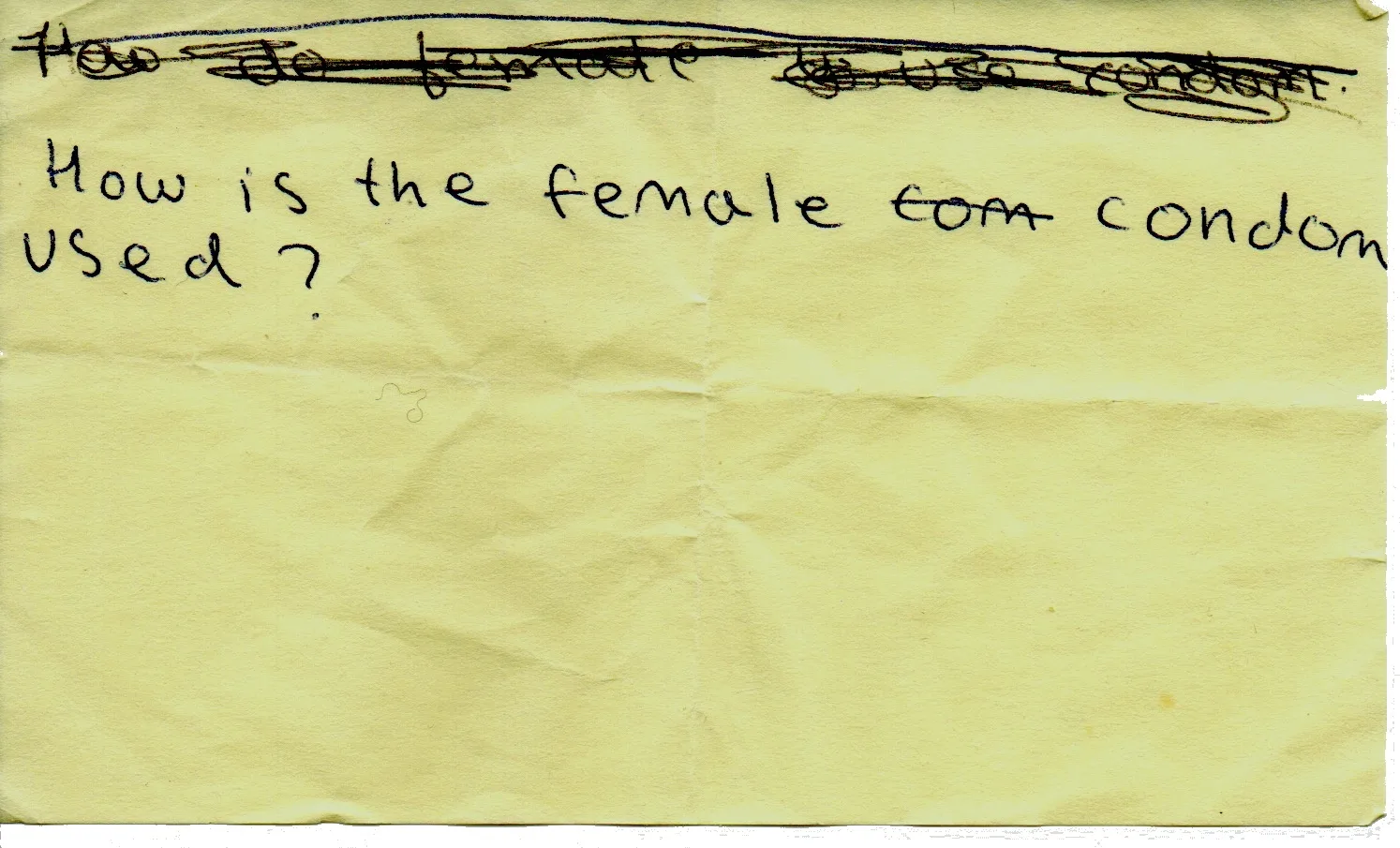
How is the female condom used?
A female (also called an internal condom or ) is a soft pouch that goes inside the before sex. It works the same way as a regular condom but is worn internally instead of on the .
To use one, find a comfortable position, whether that's lying down, squatting, or standing with one foot raised. Squeeze the smaller ring at the closed end of the condom and insert it into the vagina, similar to putting in a tampon. Push it in as far as it will comfortably go. The larger ring at the open end stays outside the body, covering the area around the vaginal opening.
During sex, the penis goes inside the femidom. Make sure it's going inside the condom, not between the condom and the vaginal wall, as this can happen if the condom shifts.
After sex, twist the outer ring to keep everything inside, then gently pull the condom out. Wrap it in tissue and put it in the bin. Don't flush it.
A few things to know: you can put a femidom in up to eight hours before sex, which means you don't have to stop in the moment to sort it out. Don't use one at the same time as a regular condom. And they're free from .
A female , also called a , is a soft pouch that goes inside the before sex.
To use one, squeeze the smaller ring at the closed end and push it into the vagina, a bit like putting in a tampon. The bigger ring at the open end stays outside the body.
During sex, the goes inside the femidom. Make sure it goes in the right place and not between the condom and the vaginal wall.
Afterwards, twist the outer ring to keep everything inside, pull it out gently, and put it in the bin.
You can put it in up to eight hours before sex. Do not use it at the same time as a regular condom.
Need to talk to someone?
- BrookSexual health, contraception, relationships, STIs. For under-25s.
- NHS Sexual HealthSexual health services, STI testing, contraception.
- ChildlineAny issue affecting under-19s. Abuse, bullying, mental health, relationships, sexual health.
Other questions young people ask
-
 Contraception & Pregnancy
Which method of contraception is the most effective?
Read the answer -
 Contraception & Pregnancy
What if the condom are too big?
Read the answer -
 Contraception & Pregnancy
What is the minimum age you need for free condoms?
Read the answer -
 Contraception & Pregnancy
What is the best form of contraception?
Read the answer -
 Contraception & Pregnancy
How do get free condoms?
Read the answer
Where to go from here
Three places this answer connects to — pick what you need next.
The book that answers the questions young people really ask — written for parents, carers and educators.
Buy the book →Curriculum guidance, lesson ideas and key terms to teach this topic with confidence.
See the topic hub →Expert-led delivery, training and curriculum planning from the team behind Okay to Ask.
See our services →